
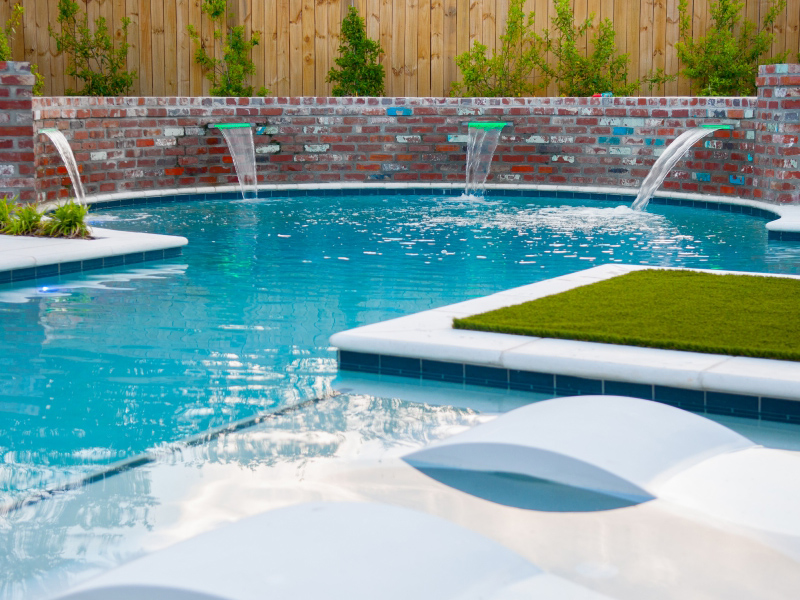
A backyard pool is one of the most enjoyed features a Baton Rouge home can have — and one of the most serious responsibilities that comes with it. Swim season brings longer days, more kids in the water, and more pool gatherings, and with that comes a significantly higher risk of water-related accidents.
The statistics are sobering. Drowning is the leading cause of death for children ages 1 to 4, and the second leading cause of unintentional injury death for children ages 5 to 14. Drowning can happen in seconds and is often silent — it can happen to anyone, any time there is access to water. CDCCDC
But here’s what matters most: drowning is largely preventable. The right combination of supervision, barriers, and preparation saves lives. If you own a pool, this is the information you need to have in place before the season gets underway.
What Active Adult Supervision Actually Means
There’s an important distinction between being present near a pool and actively supervising it. An adult sitting poolside while scrolling through their phone is not providing supervision. Data from Safe Kids Worldwide shows that 88% of children who drown had an adult present at the scene — proving that mere presence is not a substitute for active, undistracted supervision. Pool Guard
Active supervision means eyes on the water, continuously, for the entire time anyone is in or near the pool.
Adults watching kids in or near water should avoid distracting activities like reading, using the phone, and consuming alcohol or drugs, because drowning happens quickly and quietly. CDC
Parents and caregivers should always be within arm’s length of a young child while supervising them near water. For older children, distractions should still be minimized — supervision doesn’t stop being important just because a child can swim. NCBI
Designate a Water Watcher
One of the most effective strategies at pool gatherings is assigning a designated Water Watcher — a specific adult whose only job during that rotation is to watch the pool. No socializing, no phone, no stepping away.
A designated pool supervisor plays a crucial role in actively monitoring pool activities, enforcing safety rules, and responding promptly to any emergencies. Rotating the role among capable adults ensures that supervision remains consistent throughout the pool day — and allows other adults to relax with the peace of mind that someone is actively watching. In the Swim
This is especially important during parties and gatherings, where there are more people, more distractions, and an easy assumption that “someone else” is watching the water.
The Statistics on Unsupervised Access
As many as 69% of young children found drowned or submerged in swimming pools were not expected to be in or at the pool. Children gain access to pools in ways adults don’t anticipate — a gate left propped open, a door left unlocked, a brief moment when no one was watching. Most victims had been missing for five minutes or less when they were found. American Red CrossCPSC
This is why supervision and physical barriers must work together. One without the other isn’t enough.
Physical Barriers: Your First Line of Defense
Pool fencing is the single most effective structural safeguard against unsupervised access. Four-sided isolation pool fencing that completely encloses the water — separating the pool from both the yard and the house — reduces a child’s risk of drowning by 83% compared to having no fence or only three-sided perimeter fencing. Pool Guard
The fence should be at least four feet in height and fully enclose the pool, with self-closing and self-latching gates. Gates should never be propped open and should be checked regularly to make sure latches are functioning properly. CDC
For gunite pool owners, this is also a natural opportunity to think about how your outdoor living space is designed. A well-planned fence or barrier doesn’t have to be an eyesore — it can be integrated into the overall landscaping and hardscape in a way that looks intentional and adds to the property while serving a critical safety function.
Additional barrier layers worth having:
Door alarms — If the house forms a side of the barrier, alarms on doors leading to the pool area add an additional layer of protection. CPSC
Safety covers — Motorized, weight-rated pool covers prevent unsupervised access, especially during the off-season. Standard solar covers are not safety devices and should not be relied on for protection. Pool Guard
Pool alarms — Surface alarms that trigger when water is disturbed can provide an additional alert, but should never replace fencing or active supervision.
What Not to Rely On
A few common items pool families depend on for safety that actually provide false reassurance:
“Floaties,” arm bands, or water wings do not prevent children from drowning and can easily slip off, especially when kids jump into the water. They can produce a false sense of safety for both parents and children. A properly fitted U.S. Coast Guard-approved life jacket is the only appropriate flotation device for children who are not strong swimmers. CDC
Adults should supervise children closely even when lifeguards are present. A lifeguard at a public facility is managing the entire pool — they are not a substitute for a designated adult watching your specific child. CDC
Swimming lessons are valuable and genuinely reduce risk, but children who have had swimming lessons still need close and constant supervision when in or around water. The ability to swim is not the same as being safe in a pool environment. CDC
Pool Deck Safety Rules That Matter
Beyond supervision and barriers, basic rules around the pool deck itself prevent a significant number of injuries:
- No running on the deck. Wet concrete, pavers, and tile are slippery. Falls on a pool deck are a leading cause of pool-related injuries.
- No diving in shallow water. Caregivers should advise no jumping or diving where the depth of the water is unknown. One-third of diving injuries occur in swimming pools. NCBI
- Keep the deck clear. Toys, floats, and equipment left near the pool’s edge are access attractants for young children and tripping hazards for adults.
- No alcohol near the water for supervising adults. This should be a firm rule, not a suggestion.
Know CPR
No list of pool safety tips is complete without this one. CPR readiness is a primary determinant of drowning survival — immediate bystander CPR can change an outcome in seconds, before paramedics arrive. Every adult who regularly spends time around a pool should be trained and current in CPR. The American Red Cross and American Heart Association both offer accessible in-person and online certification courses. Pool Guard
A Pool Is an Investment — Protect the People in It
At Pinnacle Exterior Construction, we build custom gunite pools throughout Baton Rouge and the surrounding area — and we believe pool ownership comes with a genuine responsibility to get safety right. If you’re in the planning stages of a new pool build, our team can help you think through barrier and fencing options that are both effective and beautiful.
Contact PEC today to discuss your project, or explore our outdoor living resources for more guidance on making the most of your backyard space safely.