
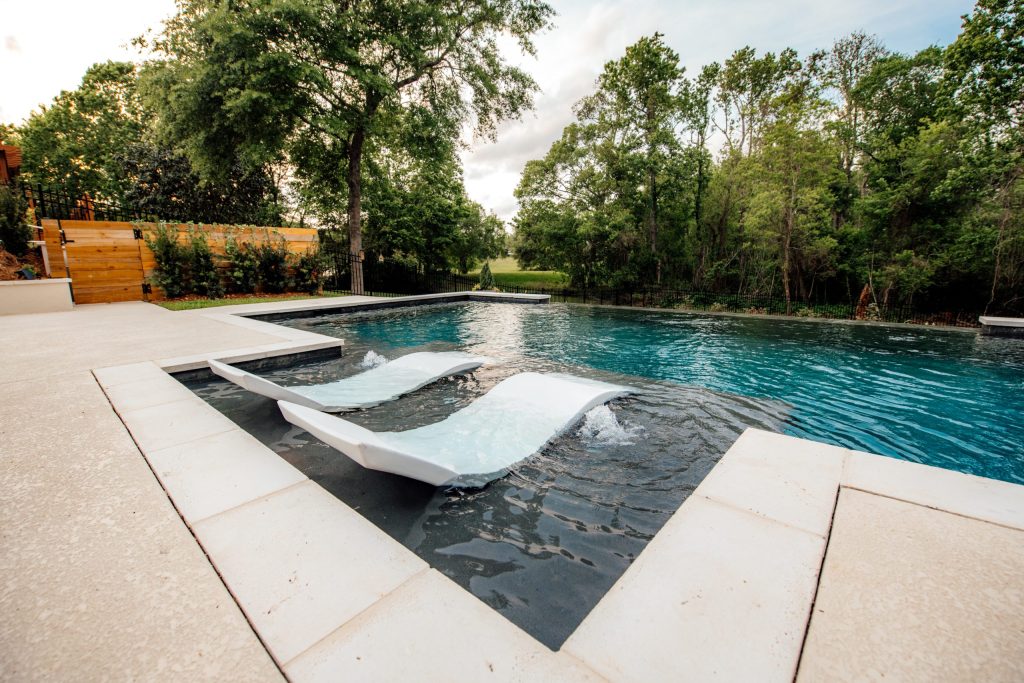
You shocked your pool expecting clear water — and woke up to a cloudy, milky mess. A pool that’s cloudy after shocking is one of the most frustrating problems for Baton Rouge pool owners, especially in the summer heat when you’re relying on your pool daily. The good news: it’s almost always fixable. Here are the five most common reasons it happens and exactly what to do.
The good news: cloudy water after shocking is almost always fixable. Here are the five most common reasons it happens and what to do about each one.
Why Your Pool Is Cloudy After Shocking:
1. Your Pool’s pH Was Off Before You Shocked
This is the most common culprit. Shock only works properly when your water’s pH is in the right range — between 7.2 and 7.4. If your pH was too high (above 7.6) before you added shock, the chlorine becomes significantly less effective and struggles to dissolve and disperse properly, leaving your water hazy.
The fix: Always test and adjust your pH before shocking. If your pH is high, bring it down with muriatic acid first, wait for the water to circulate, then shock. Don’t skip this step — it’s the most impactful thing you can do to get shock working the way it should.
2. You Have a High Level of Combined Chlorine (Chloramines)
When chlorine binds with ammonia from sweat, sunscreen, and other organics in the water, it forms chloramines — also called combined chlorine. Chloramines are what cause that strong “pool smell” and eye irritation, and when you shock a pool with a high chloramine load, the reaction can temporarily cloud the water as the chlorine works to break them down.
The fix: This is actually shock doing its job. Keep your pump running and give it 24–48 hours. The cloudiness should clear on its own as the chloramines are destroyed and the water turns over. Test your free chlorine levels once it clears.
3. You Didn’t Use Enough Shock
When chlorine binds with ammonia from sweat, sunscreen, and other organics in the water, it forms chloramines — also called combined chlorine. Chloramines are what cause that strong “pool smell” and eye irritation, and when you shock a pool with a high chloramine load, the reaction can temporarily cloud the water as the chlorine works to break them down.
The fix: This is actually shock doing its job. Keep your pump running and give it 24–48 hours. The cloudiness should clear on its own as the chloramines are destroyed and the water turns over. Test your free chlorine levels once it clears.
4. You Didn’t Use Enough Shock
Under-dosing is a surprisingly common mistake. When you don’t add enough shock to reach breakpoint chlorination — the level at which chlorine can actually destroy contaminants — the chemicals react with what’s in the water without fully sanitizing it. The result is a cloudy, partially treated pool.
In Baton Rouge’s summer heat, you often need to shock more aggressively than the package instructions suggest, because high water temperatures and heavy bather loads increase the demand on your chemicals.
The fix: As a general rule, use 1 lb of calcium hypochlorite shock per 10,000 gallons of water for routine shocking, and double that amount if you’re dealing with algae or a heavily used pool. Always calculate based on your pool’s actual volume.
5. Your Filtration System Isn’t Keeping Up
Shock stirs up particles that your filter then needs to remove. If your filter is dirty, undersized, or not running long enough, those particles stay suspended in the water and cause cloudiness that lingers for days.
This is especially common after a heavy storm in the Baton Rouge area, when debris and organic matter push your filter’s capacity.
The fix: Before and after shocking, make sure your filter is clean and your pump is running at least 8–12 hours per day. If you have a sand filter, consider backwashing it before you shock. For cartridge filters, rinse or replace the cartridge. If cloudiness persists beyond 48 hours, your filter may need a deep clean or inspection.
6. You Have a Calcium or Mineral Imbalance
Hard water is a real issue in Louisiana. If your calcium hardness is too high — above 400 ppm — the shock can react with the excess calcium in the water and cause a white, chalky cloudiness. This is sometimes called “calcium precipitation” and it’s distinct from the cloudiness caused by contaminants or chloramines.
You may also see this if your total dissolved solids (TDS) are elevated, which happens over time as chemicals and minerals accumulate in the water.
The fix: Test your calcium hardness and TDS levels. If calcium hardness is the issue, partially draining and refilling the pool with fresh water is often the most effective solution. A flocculant can also help drop suspended calcium particles to the bottom so they can be vacuumed out.
How to Prevent Cloudy Water After Shocking your Pool
A few habits that keep your water clearer after every shock treatment:
- Test before you treat. Check pH, alkalinity, and chlorine levels before adding shock every time.
- Shock in the evening. UV rays destroy chlorine rapidly. Evening shocking gives the chemicals time to work overnight without being degraded by sunlight.
- Run your pump overnight. Keep circulation going for at least 8 hours after shocking.
- Don’t skip the filter. A clean filter is what actually removes the particles that shock breaks down.
Still Cloudy After 48 Hours?
If your pool is still hazy two days after shocking, the issue likely goes deeper than a simple chemistry fix. Persistent cloudiness can indicate a filtration problem, an algae bloom in its early stages, or a significant mineral imbalance that needs professional assessment.
Pinnacle Exterior Construction’s pool maintenance team serves homeowners throughout the Baton Rouge area. If your pool isn’t clearing up on its own, we can test your water, identify the root cause, and get it back to clear — without the guesswork.
Learn more about our Baton Rouge pool maintenance service →
Have a pool question? Contact our team — we’re happy to help.