
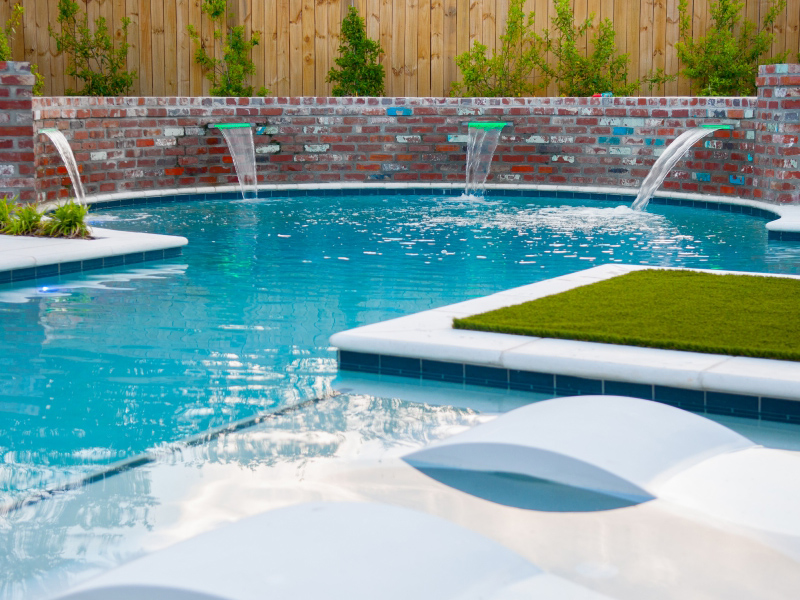
If you’ve noticed a stubborn stain creeping across your gunite pool’s plaster, quartz, or pebble finish, you’re not alone. In fact, gunite pool staining is one of the most common issues gunite pool owners run into. The good news is that most stains are treatable once you know what’s actually causing them.
Why Gunite Surfaces Are Prone to Staining
Because gunite pools are built with a porous cementitious surface, they’re more prone to staining than fiberglass or vinyl. However, that same surface is also what makes gunite so durable and fully customizable. It’s why gunite remains the top choice for custom pools here in Baton Rouge. So, let’s break down the most common causes of gunite pool staining and exactly how to fix each one.
What Causes Staining on a Gunite Pool?
Generally, gunite pool stains fall into three categories: metal stains, organic stains, and mineral or scale buildup. Each one looks different and needs a different fix. Treating the wrong type of stain can actually make the problem worse.
1. Metal Stains
Often, metal stains show up as reddish-brown, greenish, or bluish discoloration. They usually appear near return jets, skimmers, or steps. Typically, they come from:
- Iron in your fill water or well water, which causes reddish-brown stains
- Copper from your heater, pool equipment, or algaecide, which causes blue-green or greenish stains
- Manganese, which causes purple or dark brown-black stains
Since gunite’s rebar structure sits just beneath the surface, exposed or corroding rebar can also cause rust stains. This usually happens if the plaster has thinned or cracked in that spot.
How to fix it: A metal-sequestering agent binds to the metal ions in your water. This stops them from oxidizing and re-staining your surface. For localized spot stains, apply a metal-out treatment directly to the affected area, then run a full water test. This usually resolves the stain within a few days. If the stain keeps returning in the same spot, that’s often a sign of exposed rebar underneath. That needs a professional inspection, not just a chemical treatment.
2. Organic Stains on Gunite Pools
In Louisiana specifically, this type of gunite staining is extremely common thanks to our heavy tree cover, pollen season, and humidity. These stains come from:
- Leaves, berries, and tannins from nearby trees
- Pollen buildup, especially every spring
- Algae that’s died off but left a stain behind
Usually, organic stains appear yellow, brown, or greenish. They also tend to follow the shape of whatever debris caused them — a leaf-shaped stain, for example, is a dead giveaway.
How to fix it: First, brush the stained area vigorously with a pool brush. Then, shock the pool with a granular chlorine shock. This usually breaks down organic staining within 24-48 hours. For stubborn organic stains that don’t lift with shock alone, try a chlorine tablet placed directly on the stain. This is safe on plaster (never on vinyl or fiberglass) and can spot-treat the area overnight. According to the Pool & Hot Tub Alliance, maintaining proper sanitizer levels is one of the most effective ways to prevent organic staining before it starts.
3. Mineral and Scale Staining
Because Louisiana’s water tends to run hard, calcium and mineral buildup is another frequent culprit. This type of staining shows up as white, gray, or chalky patches, and it often feels rough or crusty to the touch rather than smooth like a typical stain.
Additionally, repeated use of calcium hypochlorite (cal-hypo) shock over time can accelerate calcium buildup on plaster surfaces — something we always flag for our gunite pool owners specifically, since it’s a slower, cumulative issue rather than a one-time stain.
How to fix it: For light scale, a pumice stone or scale-removing pool brush works directly on plaster surfaces (avoid pumice on quartz or pebble finishes, since it can scratch them). For heavier buildup, an acid wash or professional descaling treatment removes the mineral layer, though this should always be done by a professional to avoid damaging the finish underneath.
How to Prevent Gunite Pool Staining
While treating an existing stain is important, prevention saves you time and money long-term. Here’s what helps most:
- Test your water weekly, especially pH, calcium hardness, and metal content if you’re on well water
- Brush your pool at least once a week to stop organic debris from settling into the surface
- Use a sequestering agent proactively if your fill water is known to be high in iron or copper
- Avoid overusing cal-hypo shock — rotate with liquid chlorine when possible to reduce calcium buildup over time
- Keep your pool covered or skimmed during heavy pollen season and leaf drop
When to Call a Professional
Most surface stains can be treated with the steps above. However, if you’re seeing recurring stains in the same spot, rough or pitted texture beneath the stain, or discoloration that won’t lift after multiple treatments, it’s worth having a professional take a look. In some cases, what looks like a stain is actually early surface etching or exposed rebar — both of which need a real repair, not just a chemical fix.
At Pinnacle Exterior Construction, we build and maintain gunite pools throughout Baton Rouge and the surrounding area, and we know exactly what our local water and climate do to plaster, quartz, and pebble finishes over time. So, if a stain isn’t responding to treatment, our pool maintenance team can diagnose whether you’re dealing with a simple surface issue or something that needs a resurfacing plan.
Frequently Asked Questions About Pool Staining
A recurring stain in one location often points to exposed or corroding rebar beneath the plaster, rather than a water chemistry issue. If a metal-out treatment doesn’t resolve it, a professional inspection can confirm whether the surface needs repair.
Pumice stones are safe on standard plaster finishes but can scratch quartz and pebble surfaces. Always check your finish type before using an abrasive tool, or ask your pool professional for a safer alternative.
Not directly, but repeated use can contribute to calcium buildup and scaling on gunite plaster over time. Rotating with liquid chlorine and monitoring calcium hardness helps prevent this.
At least once a week, and more often during pollen season or heavy leaf drop, to stop organic debris from settling into the porous surface.
Ready to get your pool professionally evaluated? Contact Pinnacle Exterior Construction today to schedule a consultation.